Our smartphones are supposed to make life easier, but sometimes they create a new set of tedious, repetitive tasks.
For months, I felt like I was constantly fiddling with my Google Pixel — manually adjusting settings, silencing notifications, or setting up the same routines.
I got fed up and decided to stop using my phone and start directing it to handle the repetitive bits for me.
After weeks of experimentation, I finally cracked the code and built an end-to-end automation workflow that now runs my Pixel on autopilot.
Setting up Modes on Pixel
Changing 5 settings becomes one easy tap


This is one of the most powerful changes I made.
I built my custom Modes that combined different settings into single, intent-based actions. After all, why should I manually change five settings every time I sit down to write, drive, or watch a movie?
For example, I hated fumbling with the volume slider right as the lights dimmed. My Theater mode is designed for instant, zero-distraction immersion.
I usually trigger it manually via a home-screen shortcut or a Quick Settings tile. When I enable the mode, the system sets the ring and alarm volume to 0. It also enables DND mode, disables AOD, and dims the wallpaper.
Aside from Theater mode, I use Writing mode to create a distraction-free terminal. I set it to enable during my work hours, automatically turning on DND and making other changes on the device.
I used to fumble with Bluetooth and music settings every time I got in the car. Driving mode makes the transition instant and safe. It uses the device’s motion and Bluetooth connection to trigger the actions I set up.
These are just three examples of how I use modes on my Pixel 8. The possibilities are endless. You can create as many custom modes as you want and tweak the entire Pixel UI experience accordingly.
Define rules on Pixel
My phone handles all the heavy work and saves me time
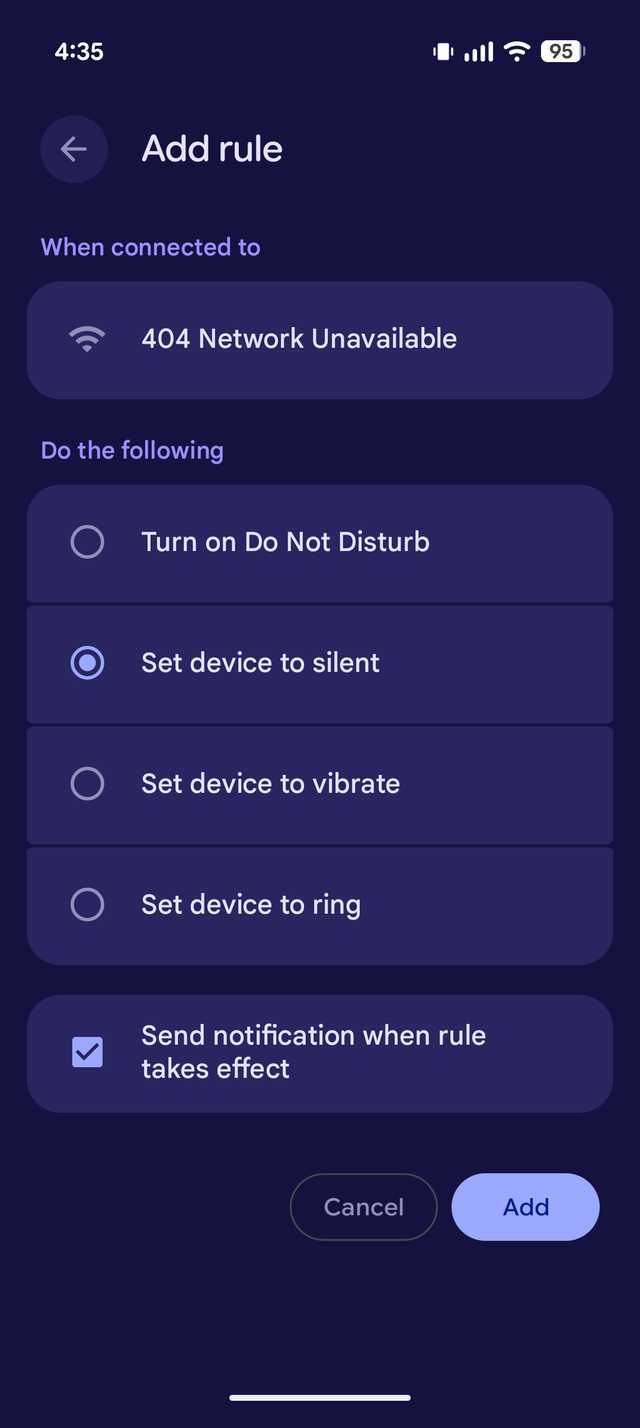
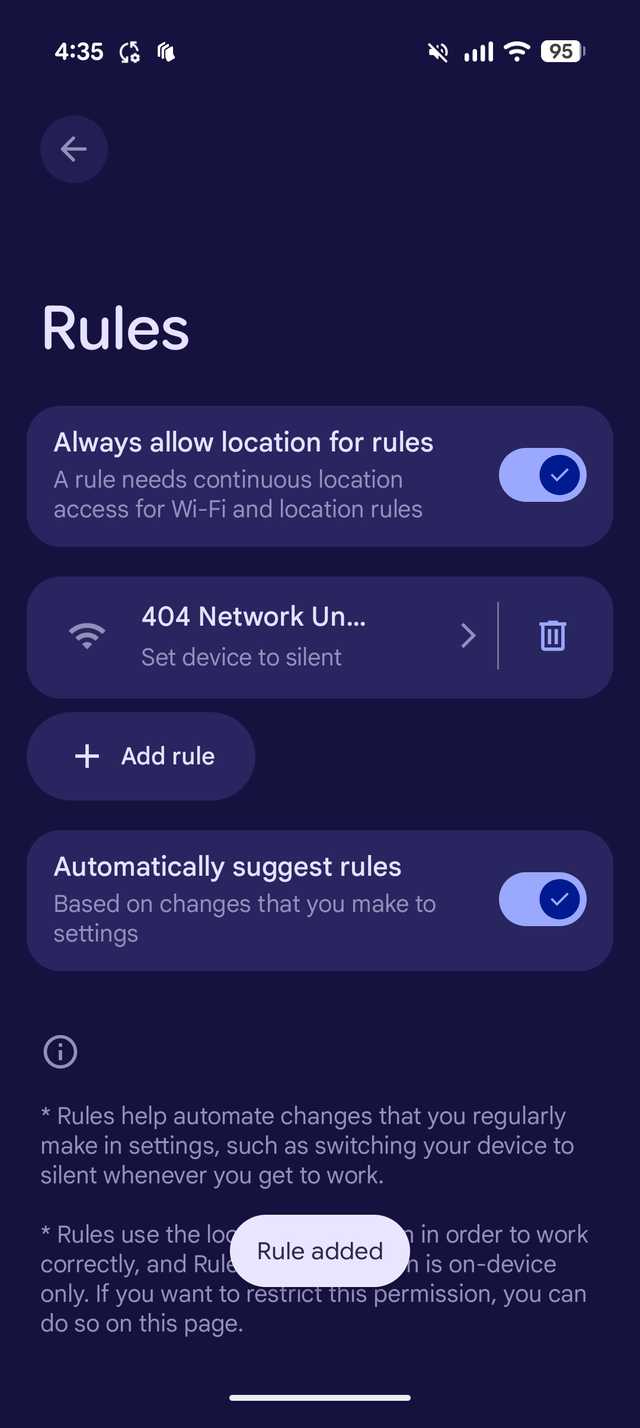
This is absolutely one of the most useful, yet frustratingly limited, features on the Pixel. I’m talking about Rules, buried deep in the system settings.
The first rule I created was for my workspace. I used the Wi-Fi trigger because it’s generally faster and more reliable than location-based GPS day to day.
When my Pixel 8 connects to the office Wi-Fi network, it automatically puts the device into Vibrate mode.
Conversely, my biggest fear at home is having my phone on silent and missing an important delivery or a family call while having dinner. I used the Location trigger and set my home address with a comfortable radius.
When I pull into the driveway, my phone registers the location and switches to ring mode, ensuring I can hear it from the next room. It’s fantastic for peace of mind.
While the basic functionality is a brilliant quality-of-life improvement — handling most common scenarios of switching between quiet and loud environments — the options are painfully limited.
Google needs to take some cues from Samsung Routines and give more options to automate device settings based on rules. Until then, third-party apps have to fill the gap, but I’m holding out for a native solution.
Schedule battery saver mode
Never run out of juice when you’re away from a charger


I have a Pixel 8, and while the performance is fantastic, I have been particular about managing its battery usage to ensure I make it through a busy day.
Relying on the default Battery Saver mode wasn’t cutting it for me, especially since I prefer to conserve power long before the phone hits the emergency 5% to 10% zone.
I went into the Battery Saver settings and customized the schedule to activate early. I chose the percentage option and set it to 30%.
Now, when my Pixel 8’s battery level crosses that limit, the screen automatically dims slightly, the background activity is restricted, and the notification bar turns orange. This gives me a reliable indication that I need to be mindful of how much I have left.
When I put it on charge, the system disables Battery Saver mode when it reaches 90%.
You never know when you’ll need proof of what was said


This automation provides peace of mind, especially when you are dealing with potential spam, customer service, or other unknown calls.
For me, having a record of every interaction from a number that isn’t saved in my contacts is invaluable.
To use the feature, open the Phone app, go to Settings > Call recording, and under Always record, enable the Numbers not in your contacts toggle.
Fly through your common tasks
There you have it — the exact workflow I built that took my Pixel to the next level. When you take control of your phone’s repetitive tasks, you will never go back to manual management.
So what are you waiting for? Dedicate an afternoon to setting up two or three of these automations, and you will see the return on investment.
Aside from that, the Pixel has other features that will change how you use your phone.
PakarPBN
A Private Blog Network (PBN) is a collection of websites that are controlled by a single individual or organization and used primarily to build backlinks to a “money site” in order to influence its ranking in search engines such as Google. The core idea behind a PBN is based on the importance of backlinks in Google’s ranking algorithm. Since Google views backlinks as signals of authority and trust, some website owners attempt to artificially create these signals through a controlled network of sites.
In a typical PBN setup, the owner acquires expired or aged domains that already have existing authority, backlinks, and history. These domains are rebuilt with new content and hosted separately, often using different IP addresses, hosting providers, themes, and ownership details to make them appear unrelated. Within the content published on these sites, links are strategically placed that point to the main website the owner wants to rank higher. By doing this, the owner attempts to pass link equity (also known as “link juice”) from the PBN sites to the target website.
The purpose of a PBN is to give the impression that the target website is naturally earning links from multiple independent sources. If done effectively, this can temporarily improve keyword rankings, increase organic visibility, and drive more traffic from search results.
Comments are closed, but trackbacks and pingbacks are open.